The University of New Hampshire Wildcats Stadium’s football field, track, seating and athletic facilities made for an exciting scene with the exception of one element: the announcer’s box. The dark blue eyesore had to go before the start of the fall football season.
General contractor Charter Brothers chose to sub out the demolition portion of the project to EnviroVantage, which serves customers across the upper East Coast by offering environmental and specialty services.
EnviroVantage owner and president Scott Knightly knew demolishing the box would require extreme precision. He needed to complete the job without damaging the surrounding area, causing microfracturing in the concrete below the structure, or disturbing or endangering the students attending classes and camps in the building and on the field.
The announcer’s box was heavily reinforced with 1-foot-thick concrete walls, floors and ceilings, all strengthened with 1-inch-diameter rebar. In addition, space inside was limited. The box’s three levels were each 500 square feet and only about 6 feet tall.
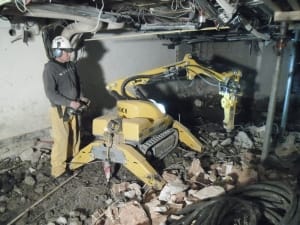
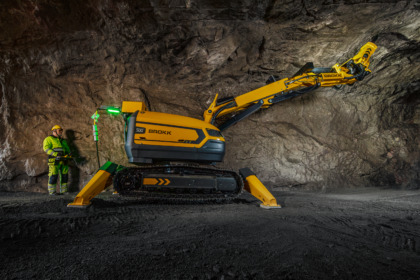
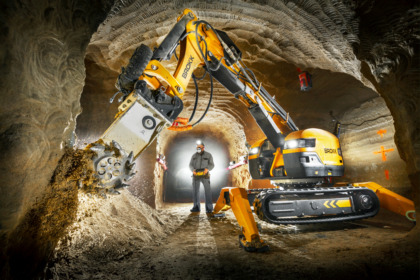
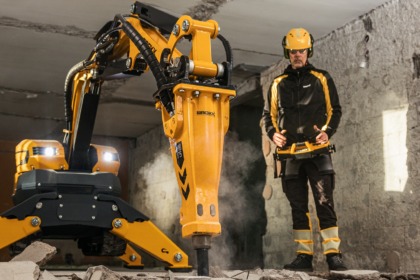
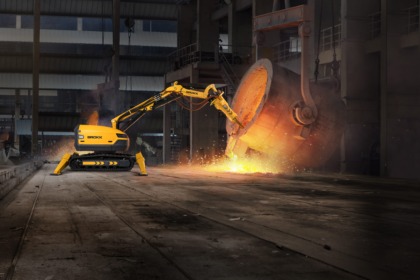
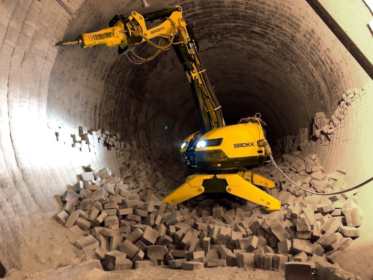
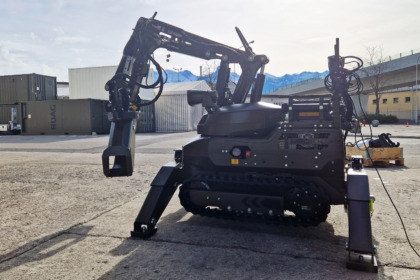
Knightly considered several demolition methods for the project, but the limited space, location and composition made most traditional demolition methods nearly impossible. He decided to use the company’s Brokk 100 remote-controlled demolition machine. He knew pairing the machine with a concrete crushing attachment would minimize most of the noise and vibrations. The machine also delivers much more power than a worker with a handheld tool.
Starting at the top level of the announcer’s box, EnviroVantage used the B100’s 13-foot reach, coupled with the Darda CC340 concrete crusher’s 37 tons of power, to demolish the walls around the machine from the inside. Then crews moved the B100 down a level and demolished the ceiling and walls. Finally, they moved the machine outside the structure and continued demolition until the box was level with the top of the stands.
The machine’s power — and the fact that it didn’t need to take breaks from the heat or get fatigued — significantly boosted productivity. The remote-control operation of the unit also kept workers away from hazards inherent in demolishing a ceiling as well as reduced the risk of hand and arm injuries related to constant exposure to vibrations.