The Many Faces of Brokk Operators: Tengo
14 August 2026 News articles
- Name: Tengo Carter
- Age: 62
- Profession: General Manager
- Years of experience: 30 years
- Company: T-Breaks
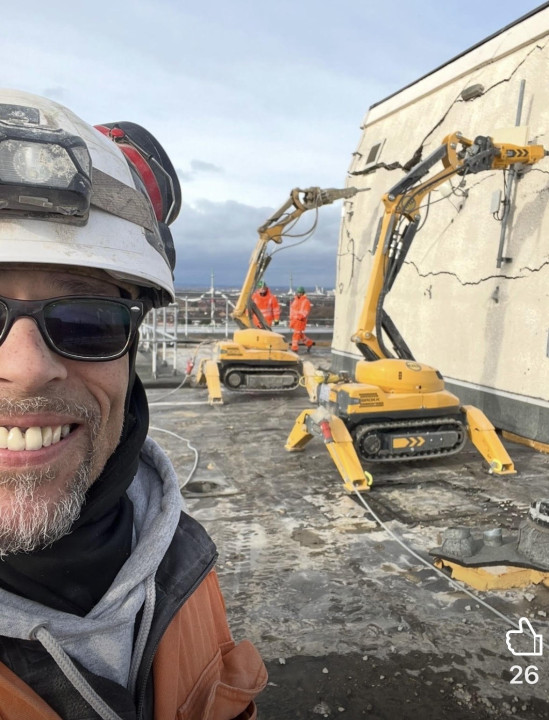
I have been operating Brokk demolition robots for around 15 years and have worked in the industry for more than 30 years.
For the past six years, I have worked as a freelance operator with T-Breaks.
I started my career in the diamond drilling industry as a water boy and learned drilling and sawing on the job as I progressed. Back then, it was a real “wow factor” job in my eyes. It was tough work, especially having to move heavy hydraulic power packs and equipment around site.
After 25 years in the industry, the physical demands took their toll on my body. I developed degenerative spine disease, suffered nerve damage, and eventually had two cervical spine discs replaced.
Unfortunately, that brought an end to my ability to carry out heavy manual work.
I was first introduced to a Brokk while working at Canary Wharf at the beginning of the century. The moment I put on the controller belt, it just felt right. I already had experience operating 360 excavators, so the controls felt familiar from the start.
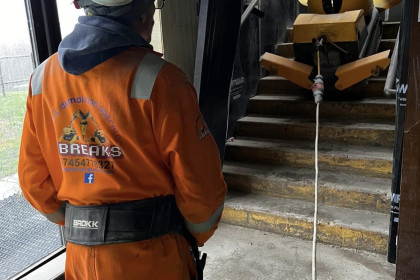
Unfortunately, I didn’t get the opportunity to operate one again for several years.
Then I joined another company and finally got my chance. I arrived on site to find a Brokk 90 waiting for me and had to teach myself how to use it. By the end of the day, I had figured it out and never looked back.
Over the years, I have worked on some incredible projects alongside amazing people and companies. I have truly been spoiled by the opportunities this industry has given me.
I’ve had more brand-new Brokk’s than I can count, including, most recently, the Brokk 130. The Brokk proved to be the perfect solution for me to remain in the industry despite my degenerative spine condition.
I absolutely love my job.
None of it would have been possible without the support of friends and companies willing to give me an opportunity when I needed one.
To me, the Brokk is the number one demolition robot. There is a machine for every environment and an attachment for almost every task. The versatility of these machines is second to none.
If there’s no hoist available, that’s not a problem. These machines can still get the job done.
The most rewarding part of my job is completing work safely and delivering results that satisfy the client. On a personal level, my reward is simply getting to operate the Brokk.
We should never forget the unsung heroes of our industry: the fitters.
There are some exceptionally talented fitters out there, both Brokk specialists and others. We simply couldn’t do what we do without them.
I have used other demolition robots throughout my career, In my experience, other machines just don’t measure up. They can be less stable, the build quality isn’t comparable, and the controls often feel heavy and awkward. That said, much of it comes down to what you’re used to.
Having a Brokk on site increases productivity while reducing the need for direct human involvement in hazardous areas, significantly improving safety. From small tasks such as loading wheelbarrows and removing screed, to large-scale wall and slab demolition, the possibilities are endless.
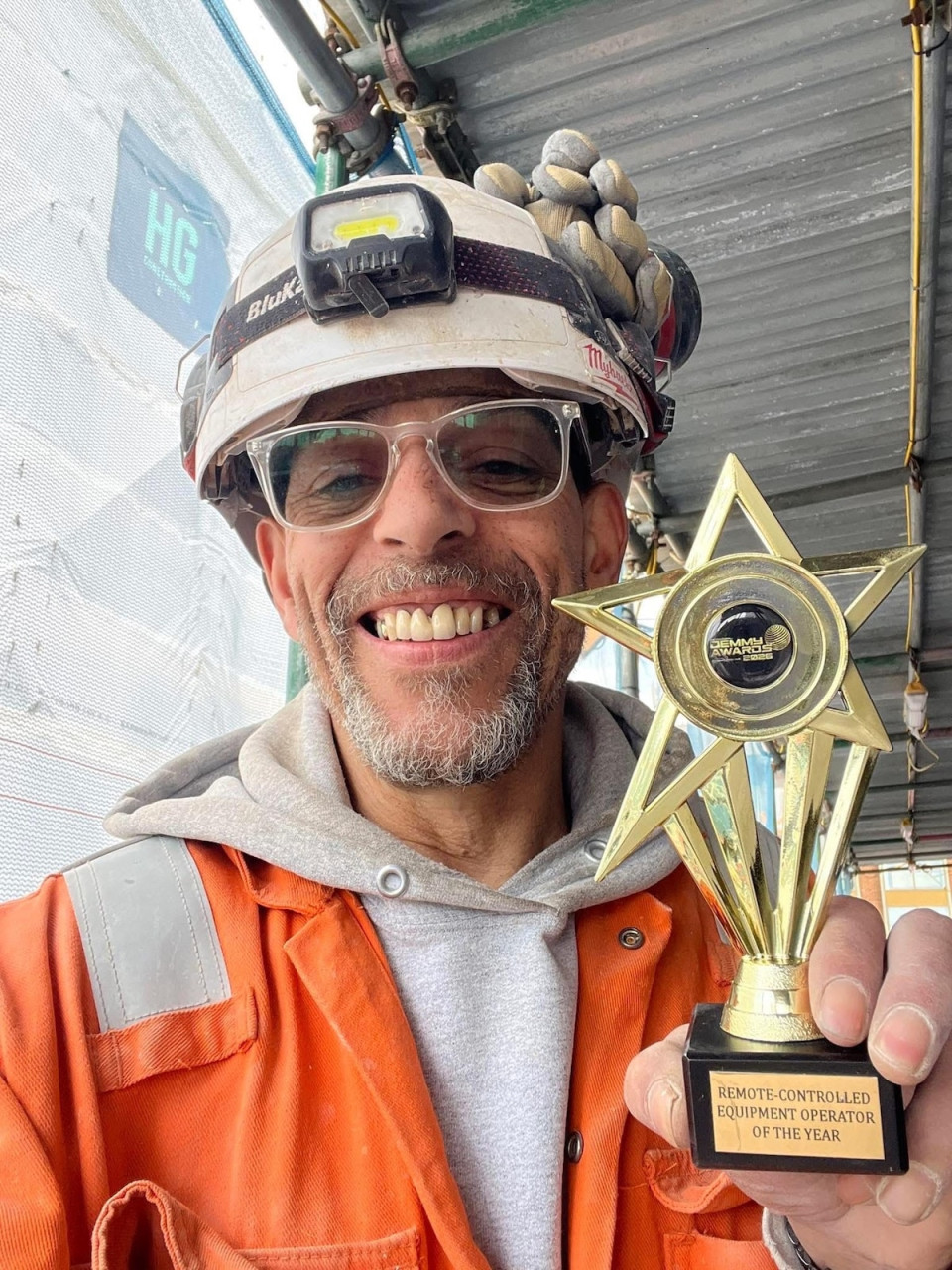
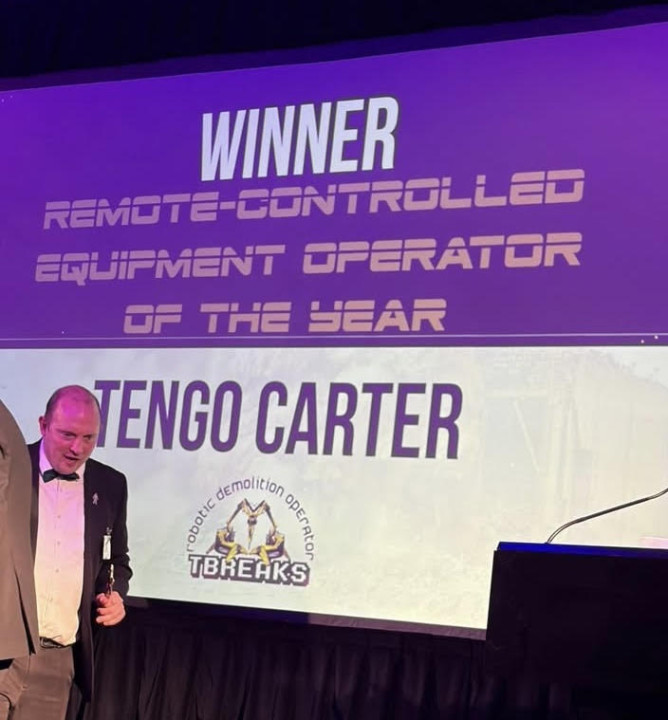
To put the icing on the cake, I was honoured to be named Demolition Robot Operator of the Year at the Demmy Awards, becoming the very first recipient of the award.
It was completely unexpected, but very gratefully received. To be recognised by peers and professionals within the industry is truly humbling.
The Importance of Brokk Training
I’m often asked how someone can become a Brokk operator.
My advice is simple: start by contacting a diamond drilling or demolition company, as they are the most likely employers to own and operate Brokk machines. Getting your foot in the door will put you in the right environment to learn about the machines and what it takes to become an operator. You’ll get to see how the machines work on real projects, observe experienced operators, and learn the safety requirements of working on site. You’ll also gain knowledge of the machine’s mechanics, including routine inspections, nut-and-bolt checks, track adjustments, and, importantly, proper greasing and maintenance procedures.
One thing I always tell people is that anyone can learn the basics of moving a Brokk around a site, but becoming a skilled and professional Brokk operator is a completely different matter.
The machine itself is only part of the job. Training teaches you how to use the machine safely, efficiently and productively. Without proper training, it’s easy to put unnecessary strain on the machine, damage attachments, increase wear on components or, more importantly, create safety risks on site.
A good Brokk operator needs to understand far more than the controls. You need to know how the hydraulic system works, how each attachment behaves, and how the machine reacts under different loads and working conditions. Understanding the machine’s capabilities and limitations is essential.
When operating a breaker, for example, it’s not simply a case of pointing and breaking. You need to understand how concrete behaves, how reinforcement affects the demolition process and how vibration is transferred through structures. Knowing where to attack a structure and in what sequence often makes the difference between a productive shift and a frustrating one.
Training also teaches operators about machine stability. Although Brokk machines are exceptionally stable when used correctly, poor positioning can reduce efficiency and place unnecessary stress on the machine. Learning how to use the outriggers properly, how to distribute weight and how to position the machine for maximum breaking force is a skill developed through training and experience.
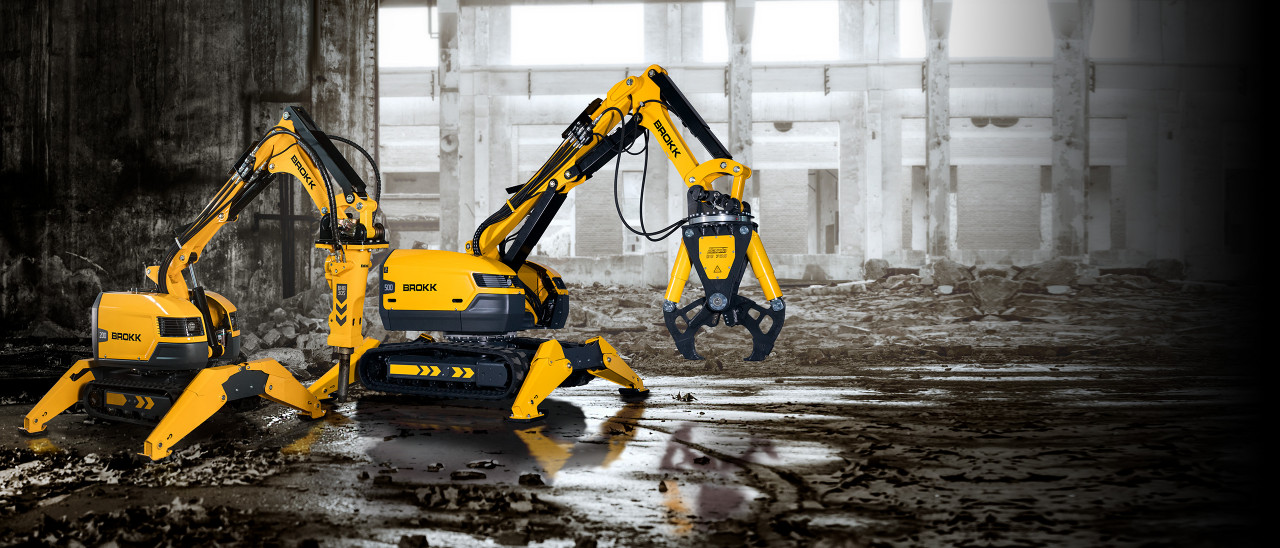
Another key area is attachment selection. Different attachments are designed for different applications. Choosing the right tool for the task can dramatically increase productivity while reducing wear and fuel or power consumption. A trained operator understands when to use a breaker, crusher, shear, grapple or bucket and how to get the best performance from each.
Maintenance awareness is another crucial part of training. Operators are the first line of defence when it comes to machine reliability. Daily checks, greasing schedules, track inspections, hydraulic hose checks and monitoring wear parts all help prevent costly breakdowns. The best operators treat the machine as if it were their own.
Safety is perhaps the biggest reason why training is so important. Demolition is an inherently hazardous industry. Operators need to understand exclusion zones, structural hazards, load paths, falling debris risks and emergency procedures. Being able to recognise changing site conditions and potential dangers is just as important as operating the controls.
A professionally trained operator will also learn how to work efficiently alongside other trades and site personnel. Communication with supervisors, banksmen, fitters and labourers is essential to ensuring work is completed safely and on schedule.
The reality is that the very best Brokk operators never stop learning. Every project presents different challenges, whether it’s a heavily reinforced concrete structure, a confined basement, a tunnel, a power station or a high-profile city-centre development. Experience builds confidence, but training provides the foundation.
I’ve been operating Brokks for over 15 years and I’m still learning new techniques today. That’s one of the things I love most about the job. The machine continues to evolve, attachments continue to improve and every site teaches you something new.
For anyone looking to become a Brokk operator, my advice is simple: take every opportunity to learn. Spend time around experienced operators, listen to fitters, understand the machine inside and out, and never underestimate the importance of proper training.
At the end of the day, a Brokk is only as good as the operator behind the controls. Training, experience, and attitude are what transform a machine operator into a true demolition professional.
Becoming a proficient operator takes time, dedication, and experience, once you become a competent Brokk operator and pass the relevant training and assessments, the world is your oyster.
How Brokk Compares to Other Demolition Robots
Over the years, I have operated several demolition robots from different manufacturers. All of them have their place in the market, but from my experience Brokk remains the benchmark against which the others are judged.
The first thing I notice is the control system. Brokk controls feel intuitive and responsive. The machine movements are smooth, predictable and precise, which is especially important when carrying out structural demolition or working around live services. Operator confidence comes quickly because the machine does exactly what you ask it to do.
Another key difference is stability. Brokk machines have an excellent balance between weight, reach and power. When working with heavy breakers or crushers, the machine remains planted and predictable. As an operator, that gives you the confidence to work efficiently while maintaining safety.
The build quality has always impressed me. Demolition work is extremely demanding on equipment. Machines are exposed to vibration, dust, impacts and harsh site conditions every day. In my experience, Brokk machines are engineered to withstand that punishment and continue performing reliably.
The attachment system is another area where Brokk excels. Switching between breakers, crushers, buckets, grapples and shears allows a single machine to perform multiple tasks throughout a project. This reduces downtime and increases productivity on site.
Support and parts availability are also important considerations. A machine is only earning money when it’s working. The level of technical support and product knowledge available through Brokk and its dealer network has been a major factor in the brand’s success.
Many competing machines offer similar capabilities on paper, but operating a demolition robot is about more than specifications. It’s about balance, reliability, controllability and operator confidence. Those qualities can only really be appreciated after spending thousands of hours on the controls.
For me, Brokk combines all of those qualities better than any other demolition robot I’ve operated. That’s why it has remained the industry leader for so many years and why it continues to be the machine of choice on some of the most challenging demolition projects in the world.
Keep updated!
Sign Up for the Brokk UK Newsletter
Thank You!
Thanks for your Email. We’ll answer as soon as possible!
// The Brokk team