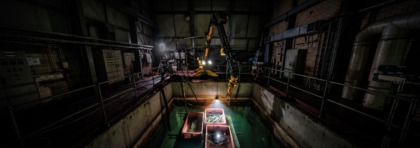
When a demolition contractor faced demolishing two 1940s-era concrete silos standing precariously over Santa Fe, New Mexico’s water supply, they knew it wouldn’t be as simple as just knocking them down. The water intake structures sat in the Nichols and McClure reservoirs on the Santa Fe River and supplied 40 percent of the area’s drinking water. The process to adjust water flow through the dams was inefficient and dangerous.
In 2014, city engineers came up with a $6 million plan to modify the silos and allow workers easier access. The city hired RMCI Inc. to construct a new system. RMCI hired A-Core Inc. to demolish the silos without damaging the inlet structures at the base.
The Nichols Reservoir silo, the first to be demolished, was about 65 feet tall, and had to be brought down to a 25-foot buried inlet section. The 10-foot diameter silo was supported by 2.5-foot-thick concrete reinforced by rebar, steel plates, angle iron and embedded gate valves. The McClure Reservoir silo was 35 feet taller and had to be brought down to another buried inlet structure. The silo was 8 feet across with 2-foot-thick concrete walls that had the same embedded steel obstacles as Nichols.
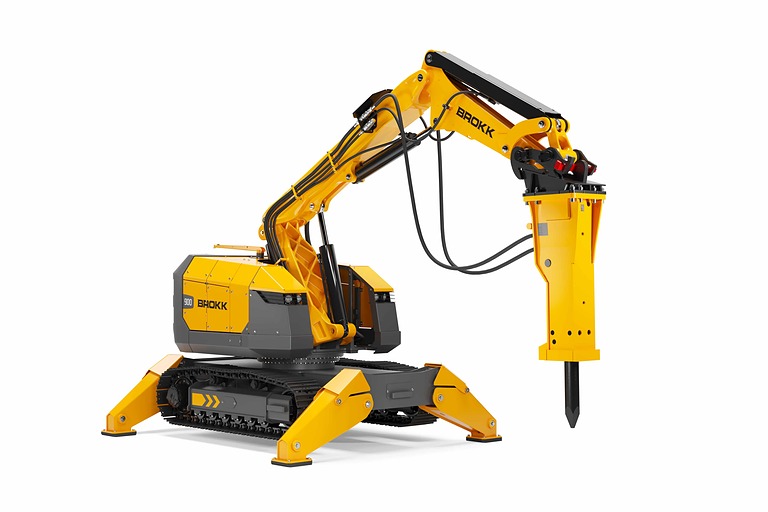
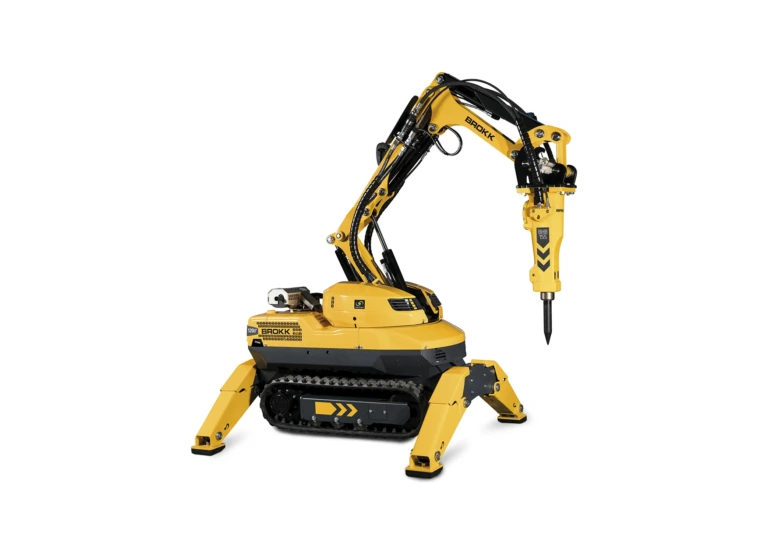
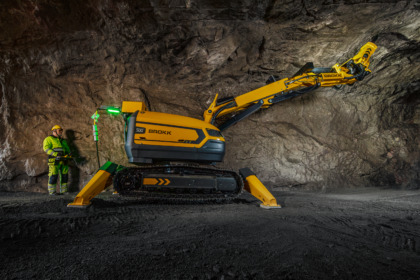
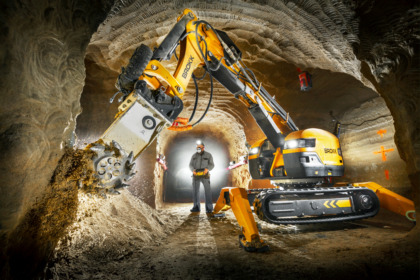
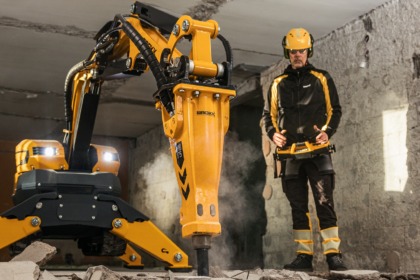
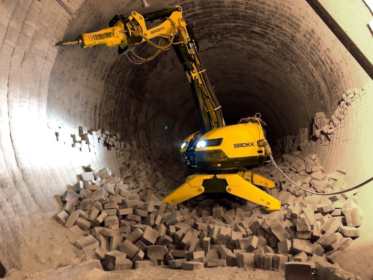
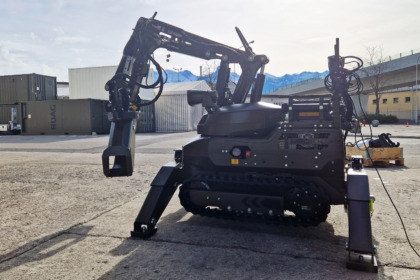
A-Core started with the shorter Nichols silo. The contractor secured their Brokk 330D to a custom steel platform and used a crane to lift it and the machine to the top of the structure. The operator directed the Brokk machine’s three-part arm from a boom lift platform, using the machine’s about 700 foot-pounds of power to break away at the structure.
“The Brokk provided just enough power and precision to break the concrete, but not so much that it could damage the structure below,” Chavez said. “The only times we had to slow down was when we had to remove rebar.”
In the end, A-Core hauled away more than 600 tons of concrete, completing the Nichols reservoir in July 2014 and McClure in May 2015.
RMCI added new intake structures, allowing city workers to adjust the valves by opening a door at the top of either dam and walking down a flight of stairs. It was a project made successful by creative thinking and innovative tools.